NLPsych
We are a group of researchers at the UKP Lab, TU Darmstadt working at the intersection of natural language processing (NLP) and mental health. We collaborate with healthcare experts to develop state of the art data-driven solutions in the mental health domain for both support-seekers and support-givers. Using NLP, our goal is to facilitate early detection, diagnosis and intervention, addressing the growing need for mental health support amid the constrained availability of mental health professionals.
News
Areas
Clinical Applications
NLP in mental health offers clinical advancements through efficient analysis of patient narratives, aiding diagnostics and treatment and improving patient-centered care. We emphasize ethical considerations and data security for responsible deployment in clinical settings.
See related research →
Privacy & Synthetic Data
Develop NLP models capable of operating on decentralized, synthetic datasets and incorporate differential privacy to ensure individual privacy while maintaining the integrity of mental health research and applications.
See related research →
Multimodality
Explore how combining textual information with visual and auditory cues can provide a more comprehensive understanding of users' mental states. Develop and assess multimodal models that leverage NLP techniques for a holistic approach to mental health assessment and intervention.
See related research →
Awareness
Publish surveys and position papers that consolidate existing knowledge, surface open challenges, and promote responsible development of AI for mental health research and practice.
See related research →
Research
Clinical Applications
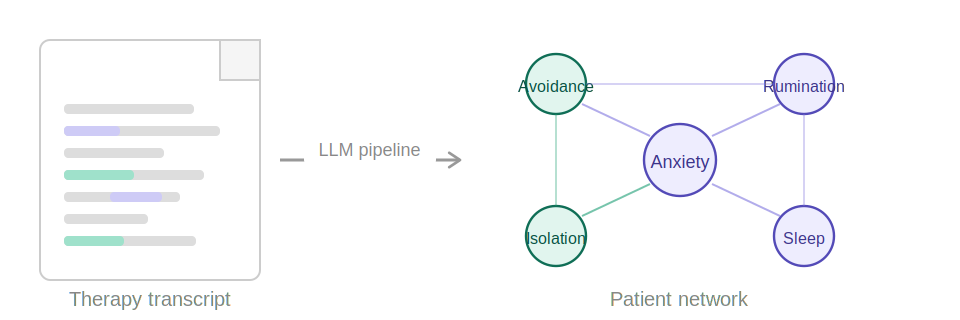
Using Large Language Models to Create Personalized Networks From Therapy Sessions
An LLM pipeline turns 77 therapy transcripts into personalised psychological networks to support case conceptualisation and treatment planning.
arXiv · 2025 →
Tailored Emotional LLM-Supporter: Enhancing Cultural Sensitivity
CultureCare, a dataset for culturally sensitive emotional support, shows that simple role-play isn't enough on its own.
EACL 2026 →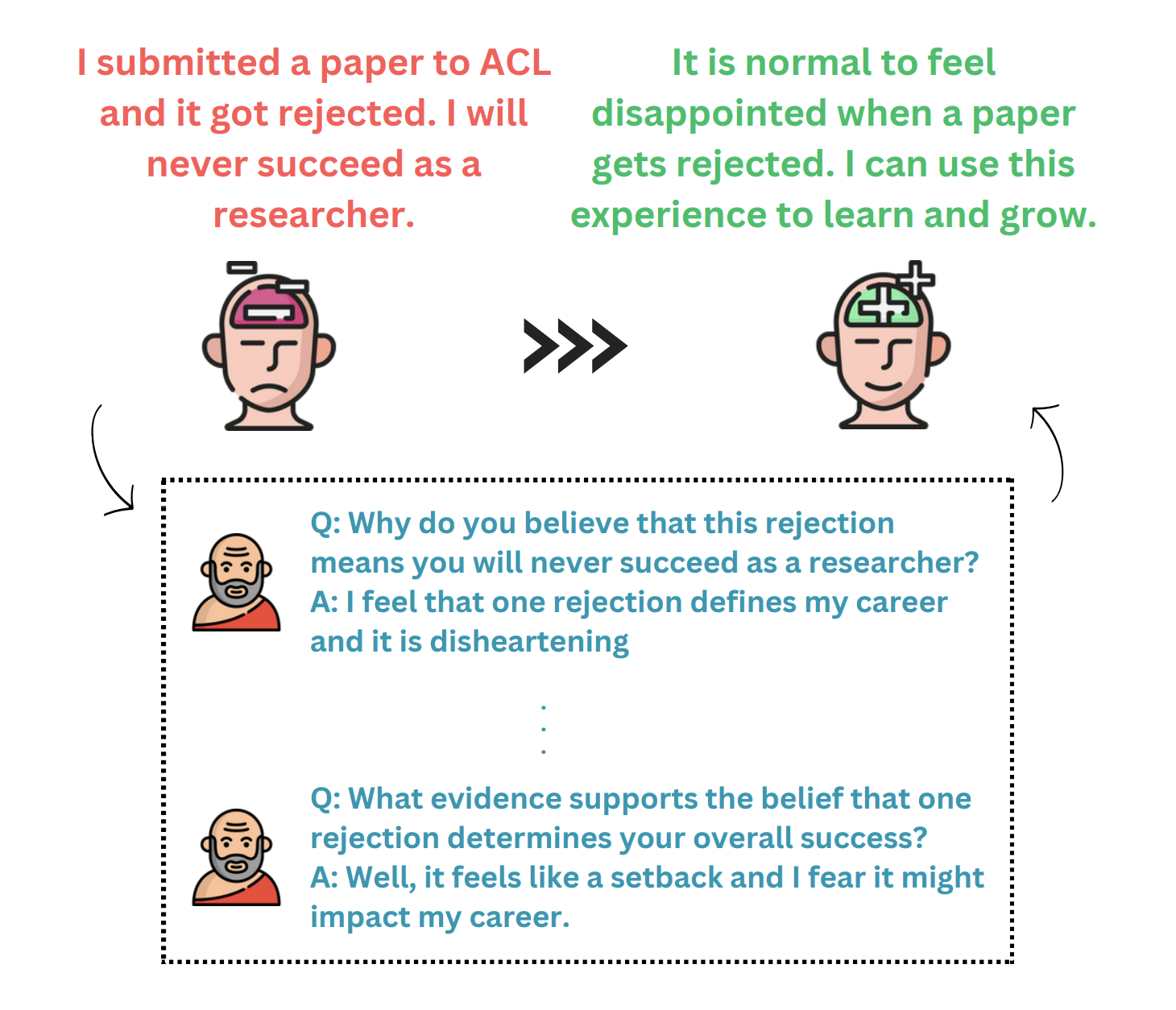
Socratic Reasoning Improves Positive Text Rewriting
Step-by-step Socratic rationales help language models reframe negative thoughts more effectively than single-step rewriting.
CLPsych 2025 →Social Influence in Eating Disorder Therapy
Extracting and quantifying the social pressures behind eating disorder symptoms, from family and peers to media, directly from therapy transcripts.
Ongoing thesis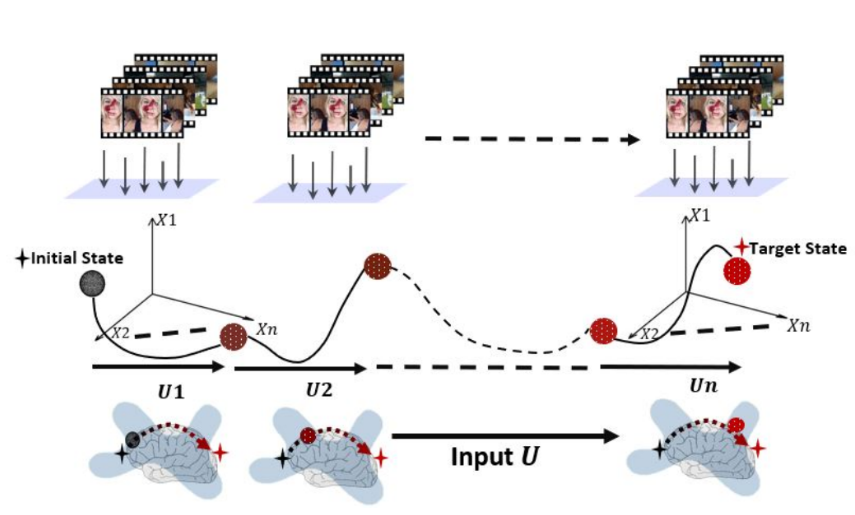
LLM-Generated Stimuli for Affective Priming
Generating emotional stimuli on demand, at a controlled intensity, instead of drawing from a small fixed set of existing material.
Ongoing thesisPrivacy & Synthetic Data
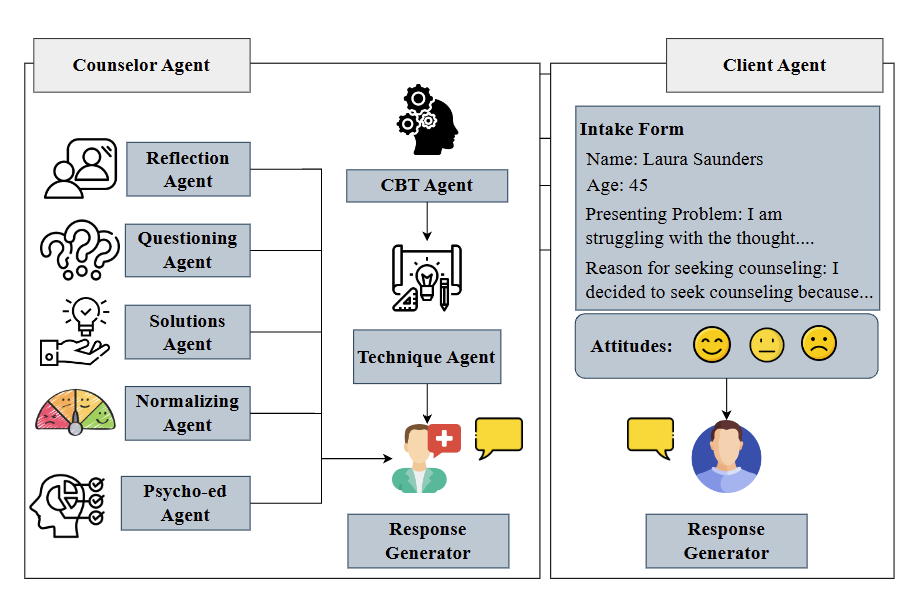
Clinically Grounded Synthetic Counseling Data
Three complementary methods, MAGneT, SQPsych, and Graph2Counsel, generate realistic multi-turn counseling dialogue without real patient data.
MAGneT → · SQPsych → · Graph2Counsel →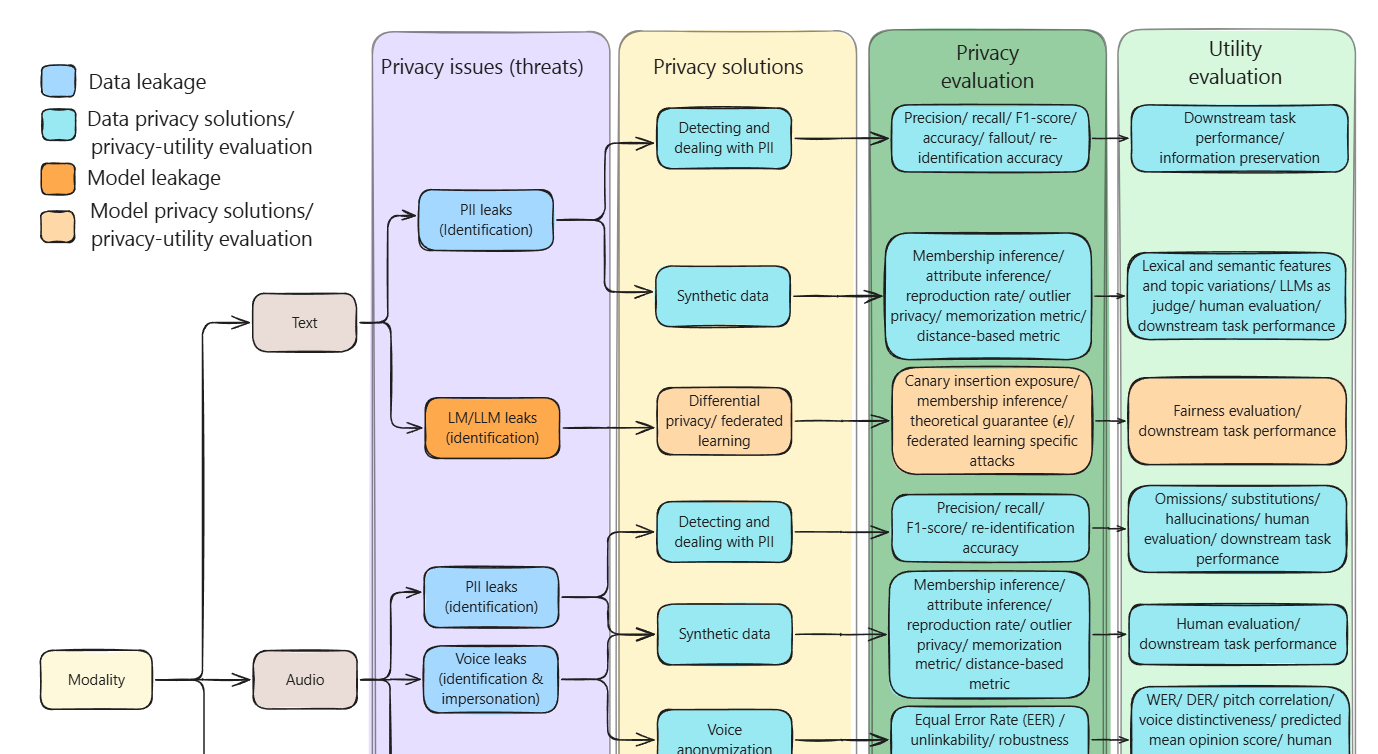
Towards Privacy-aware Mental Health AI Models
A roadmap for mental health AI that protects patient privacy by design, from anonymisation to synthetic data and private training.
arXiv (PDF) → · Nature Computational Science 2025 →Multimodality
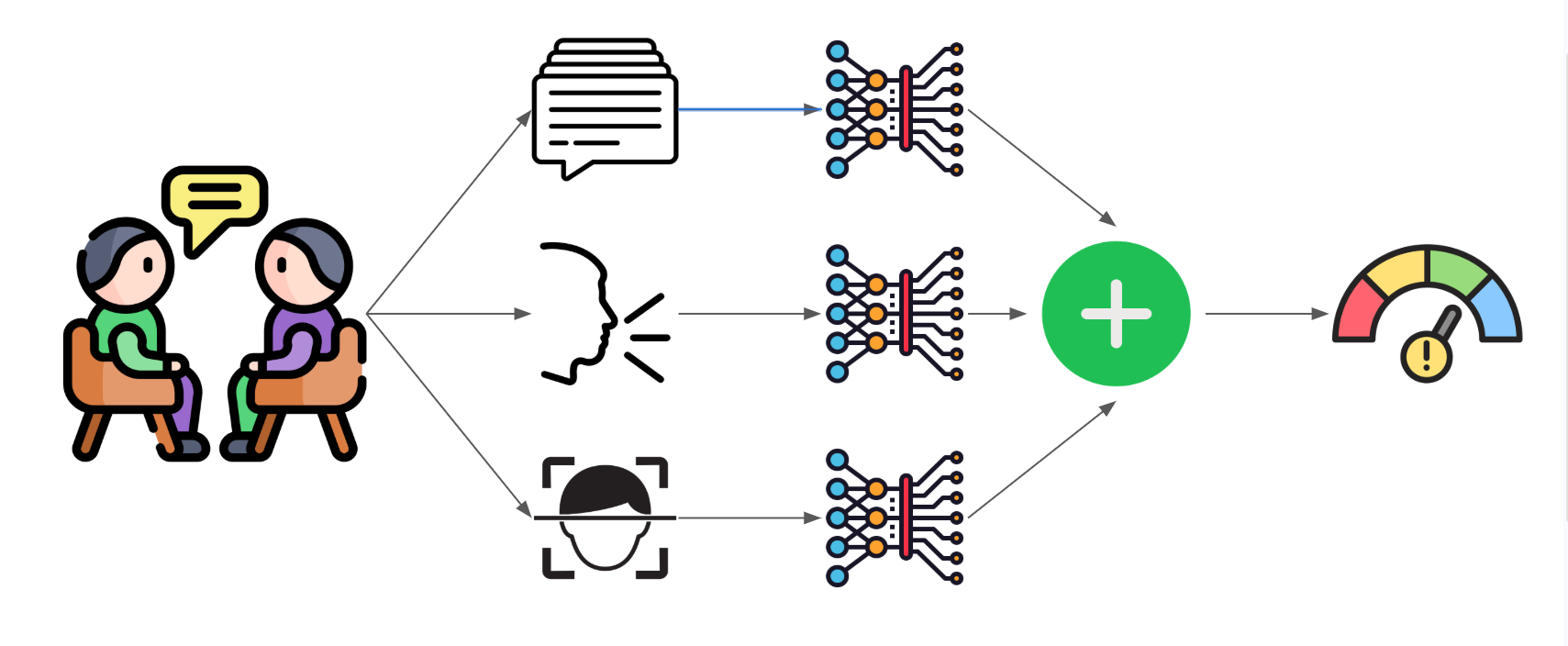
Enhancing Depression Detection via Question-wise Modality Fusion
Fusing text, audio, and video separately for each interview question gives more accurate, interpretable depression assessments.
CLPsych 2025 →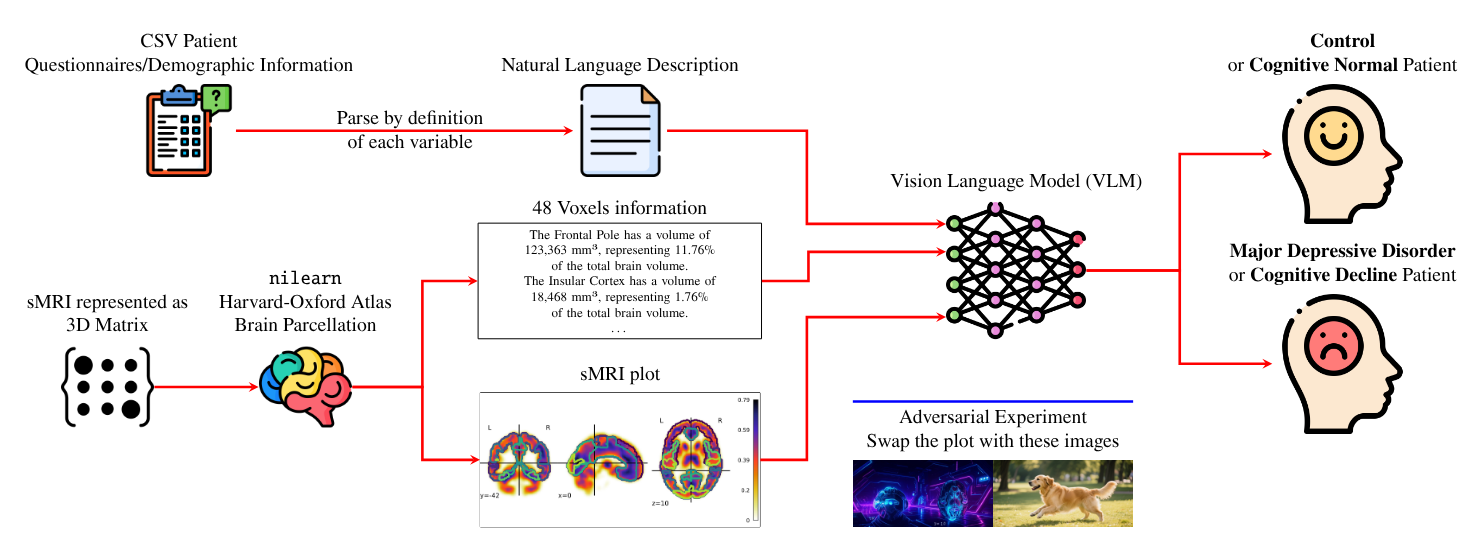
The Scaffold Effect: How Prompt Framing Drives Apparent Multimodal Gains in Clinical VLM Evaluation
Merely mentioning MRI availability in a prompt accounts for most of an apparent performance gain, exposing a shortcut we call the scaffold effect.
ExpNLP Workshop, arXiv 2026 →Awareness
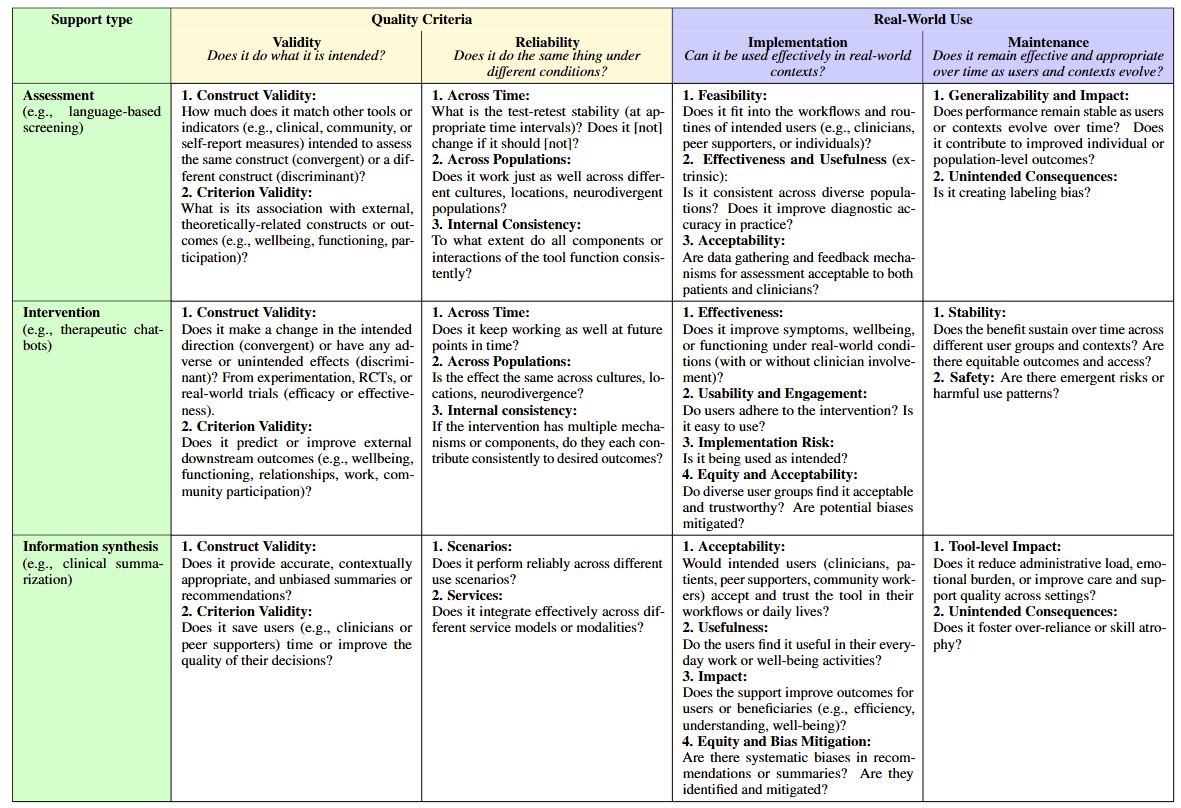
Responsible Evaluation of AI for Mental Health
An audit of 135 NLP papers finds over-reliance on generic metrics, and proposes a taxonomy for safer clinical AI evaluation.
ACL 2026 →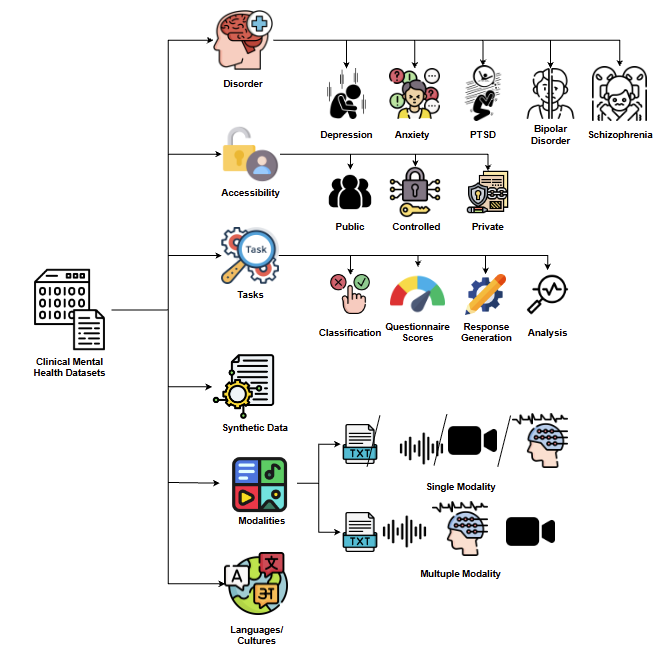
A Comprehensive Review of Datasets for Clinical Mental Health AI Systems
The first large-scale survey of clinical mental health datasets, mapped by disorder, accessibility, modality, and language.
arXiv · 2025 →Team

Iryna Gurevych
Principal Investigator
Simone Balloccu
Junior Lab Leader
Hiba Arnaout
Postdoc
Doan Nam Long Vu
PhD Student
Aishik Mandal
PhD Student
Anmol Goel
PhD Student
Dasha Hryhoryeva
PhD Student
Tobias Mayer
Former Postdoc
Neha Warikoo
Former PostdocCollaborations






Funding